TILE RUMMY FIELD NOTE 02
How Runs Work in Tile Rummy
Master legal same-colour runs, extension points, gaps, edge numbers and efficient rack organisation.
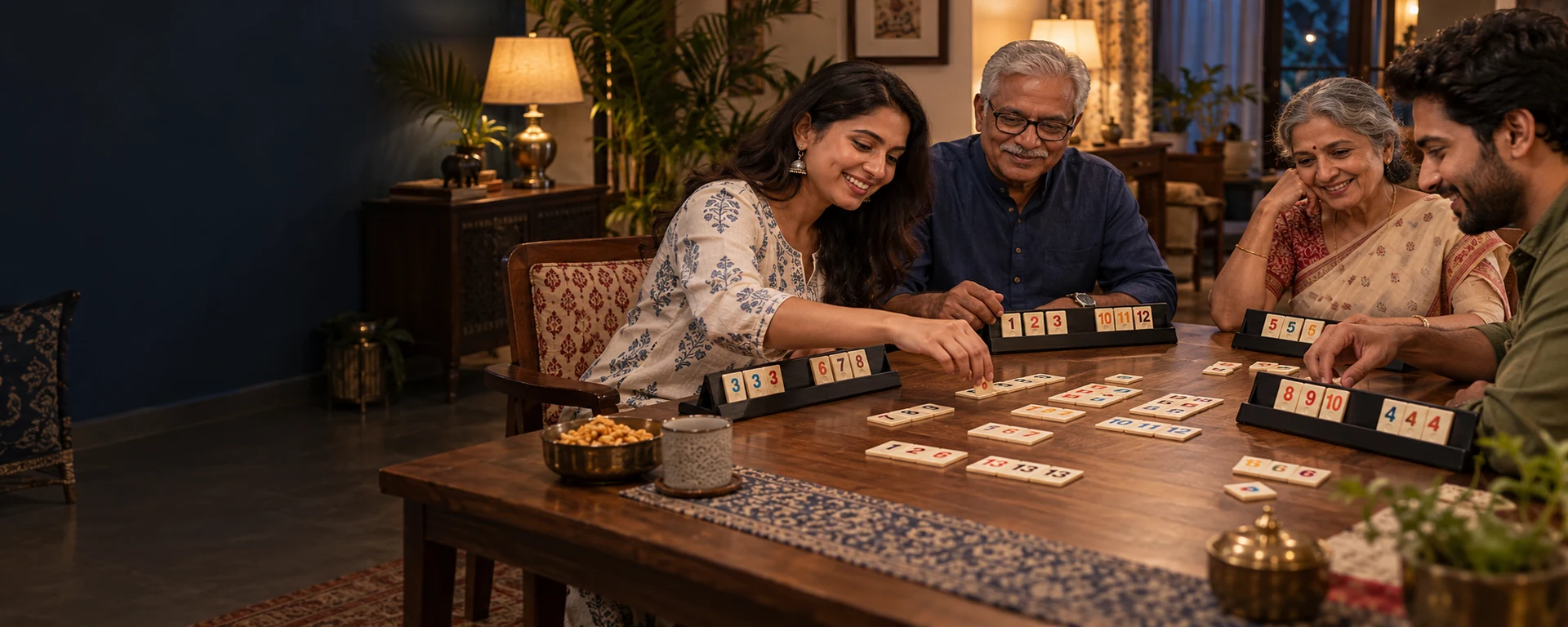
Master legal same-colour runs, extension points, gaps, edge numbers and efficient rack organisation.
Build reliable runs
A run uses at least three consecutive numbers of the same colour. A blue 4-5-6 is legal; a mixed-colour 4-5-6 is not. Gaps break the run, and most common rules do not allow wrapping from the highest number to the lowest.
A practical method
Middle tiles are flexible because they can connect on either side. Edge tiles have fewer neighbours, so evaluate them early. When two short patterns compete for one connector, prefer the option that leaves more future extensions.
Apply it at the table
On the table, a long run can sometimes be split into two shorter legal runs. Count carefully before moving anything and confirm both new runs retain the minimum length.
Good Tile Rummy decisions are visible: every tile has one legal place, every rearrangement has a finished plan.
Practice and continue
Open the Tile Sort practice, compare the wider Indian Rummy guide, or continue with A Better Tile-Rack Sorting System.