CARD-GAME TERMINOLOGY
Books and Runs in Card Games: Rummy Terminology Guide
Understand books, sets, runs and sequences in Rummy, including suit requirements, duplicate cards and common table-language differences.
Understand books, sets, runs and sequences in Rummy, including suit requirements, duplicate cards and common table-language differences.
What does “book” mean?
A book is a traditional term for a set: cards of the same rank collected across different suits. For example, 7♣–7♦–7♥ is a three-card book.
What does “run” mean?
A run is a consecutive sequence within one suit, such as 4♠–5♠–6♠. Consecutive ranks in mixed suits are not a standard Rummy run.
Books versus runs
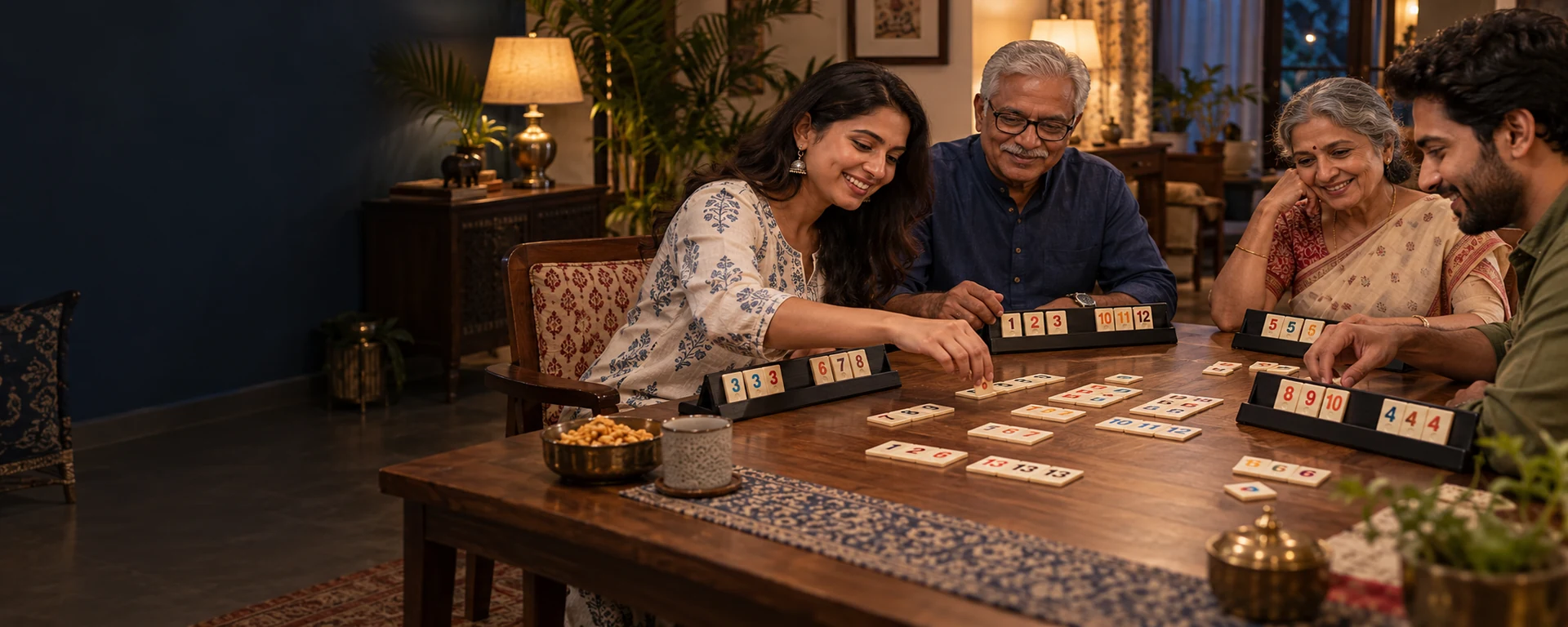
Books group equal ranks; runs group ordered ranks. A complete hand may use both, but the selected variant can require one or more sequences.
Duplicate-card rule
When multiple decks are used, identical cards can appear. Most rules do not allow two identical rank-and-suit cards to occupy separate positions in one set.
Why terms vary
Families and regions may say book, group, set, run or sequence. Define the legal structure before playing rather than relying on vocabulary alone.
Practice check
Say the suit and rank relationship aloud: equal ranks with different suits form a set; consecutive ranks with one suit form a run.
Frequently asked questions
Is a book the same as a set?
Yes in many Rummy traditions. Both refer to equal-rank cards from different suits.
Must a run use one suit?
Yes under standard Rummy rules.
Can a run wrap from king to ace to two?
Usually no. Confirm local ace rules before play.